
Data Center/Mission Critical
Mission-critical site utilities
Built for uptime,
from the ground down
Every data center runs on what is buried beneath it: medium-voltage feeders, fiber pathways, process cooling water and fire loops. GEI installs that infrastructure the way a mission-critical owner expects it, redundant, documented, on schedule and without a single utility strike.
We self-perform underground utility construction, hydro excavation, directional drilling, fiber splicing and utility locating with our own crews and late-model equipment. Hyperscale owners, EPC firms and electrical contractors bring us onto campuses where the schedule is fixed and the tolerance for error is zero.
What we self-perform
Underground scope for critical campuses
Medium-voltage and telecom duct banks
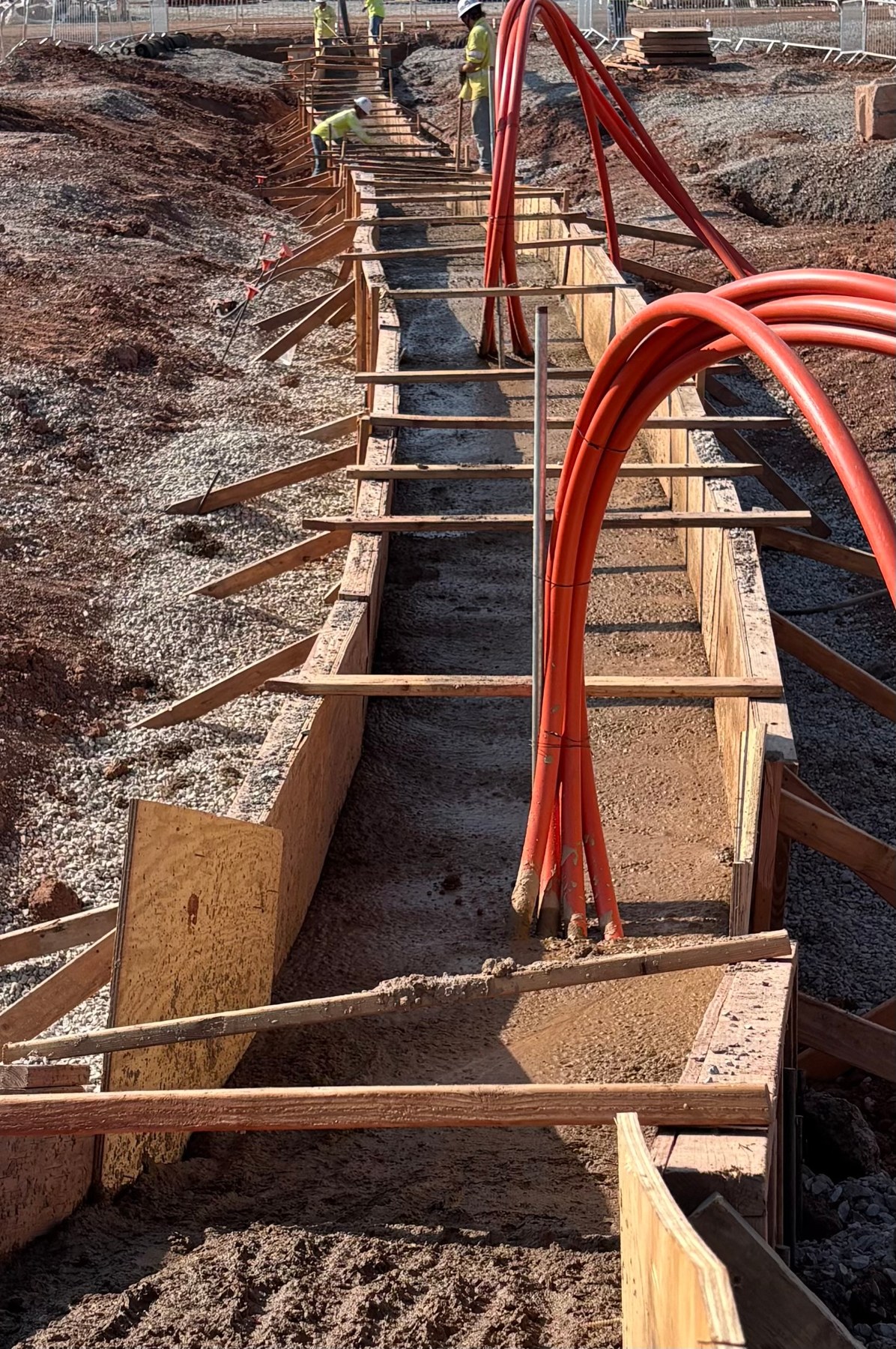
Concrete-encased duct banks are the arteries of a data center. We build them to the drawings and to the redundancy the design intends.
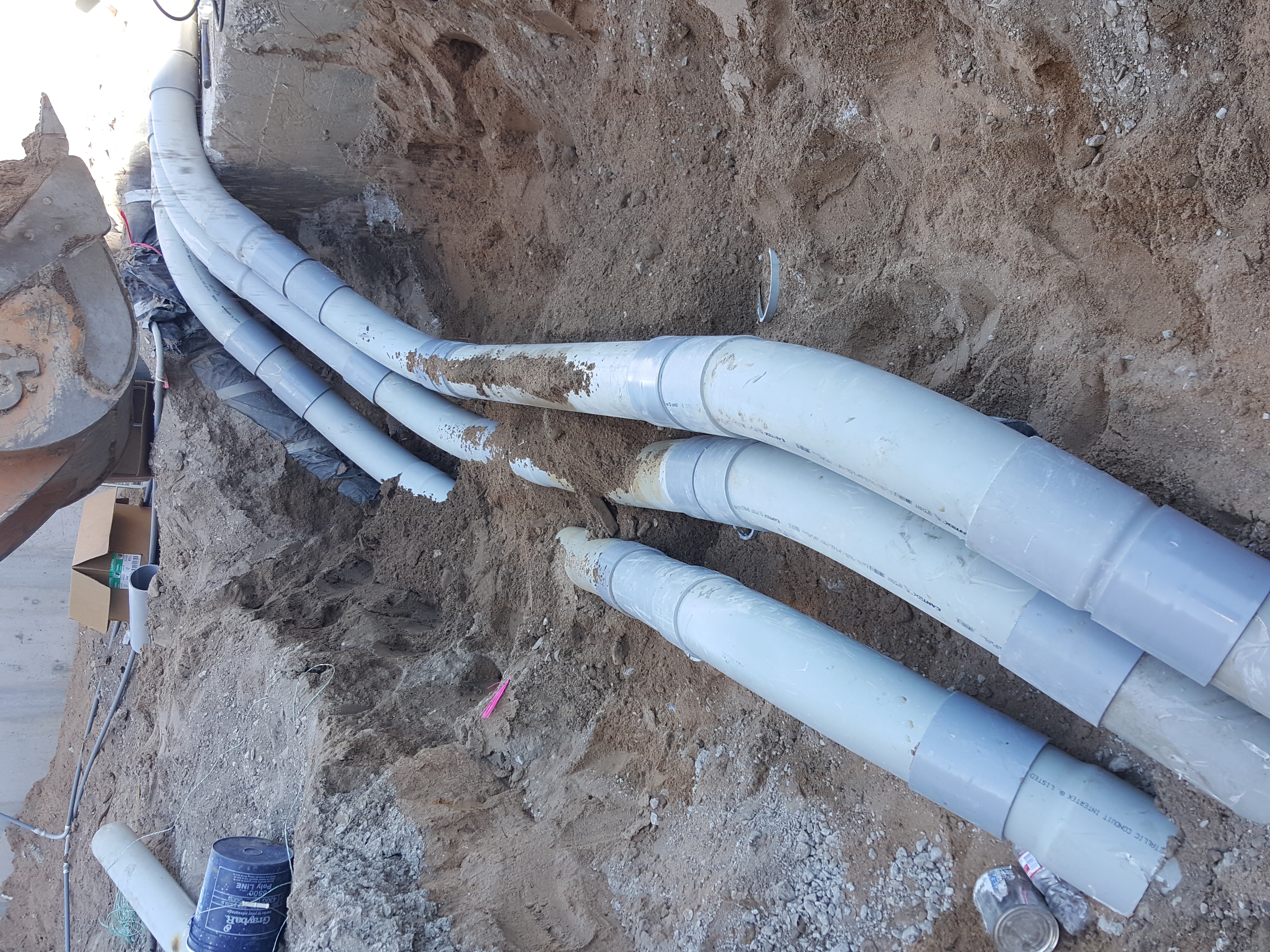
- MV/HV feeder duct banks, electrical yard conduit and manhole systems
- Fiber and communications duct banks, telecom handholes and CV vaults
- Road crossings, tie-ins and separation between A and B pathways
- Rebar, concrete encasement, backfill and compaction to specification
- Mandrel, pull-string and as-built documentation on every run
Fiber trench trough and outside plant
Fiber is the product a data center sells. We install the trough, the pathway and the glass, then splice and test it ourselves.
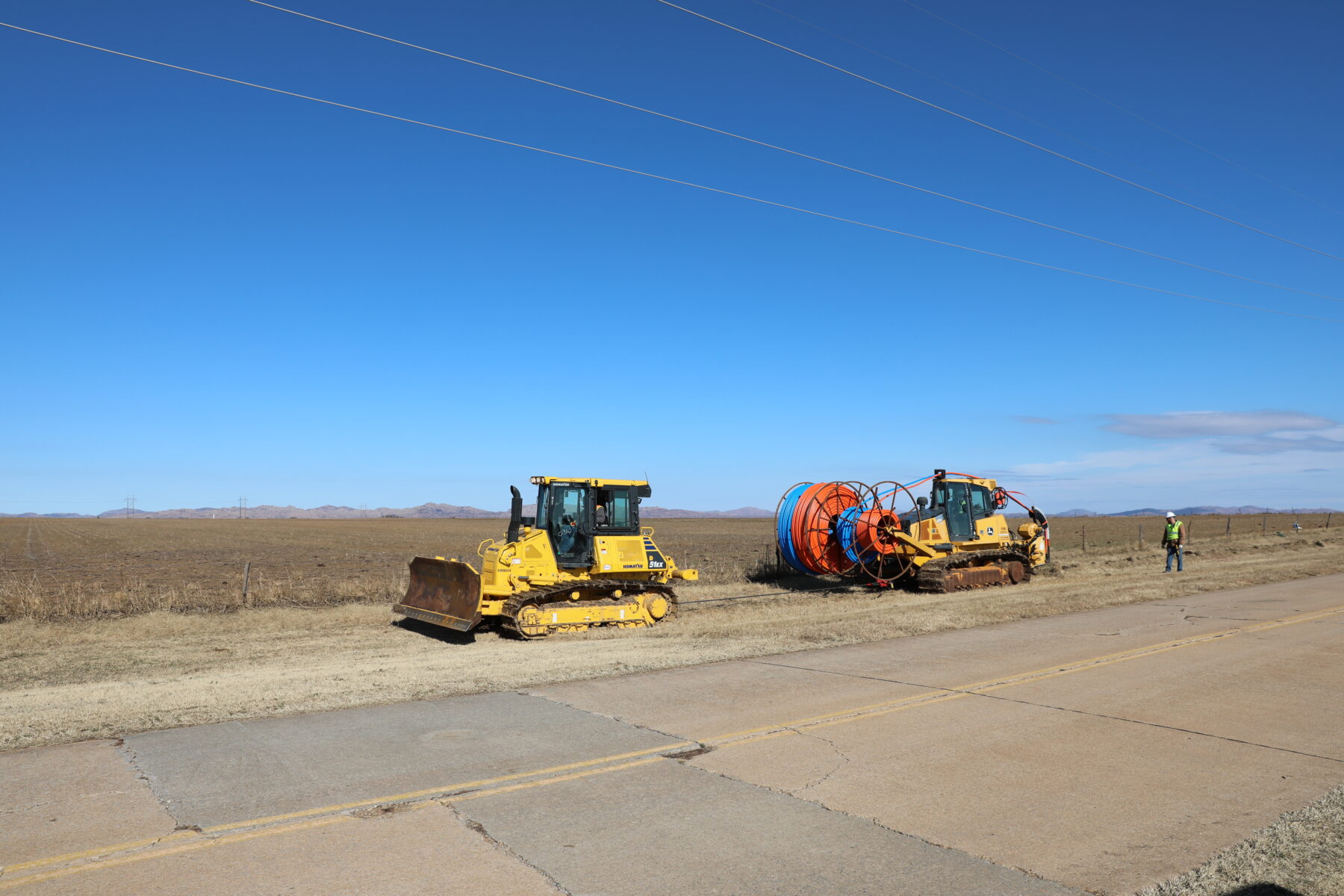
- Fiber trench trough systems with crossings and campus tie-ins
- Long-haul and campus backbone fiber, ADSS and underground OSP
- In-house fiber splicing, OTDR testing and documentation
- Aerial make-ready and pole line work where the route leaves the fence
Wet utilities and yard piping
Cooling and fire protection depend on buried pipe that is installed once and never touched again.
- Process cooling water (PCW) supply and return piping
- Underground plumbing, storm and sanitary sewer
- Fire water loops, hydrants and hydrostatic testing
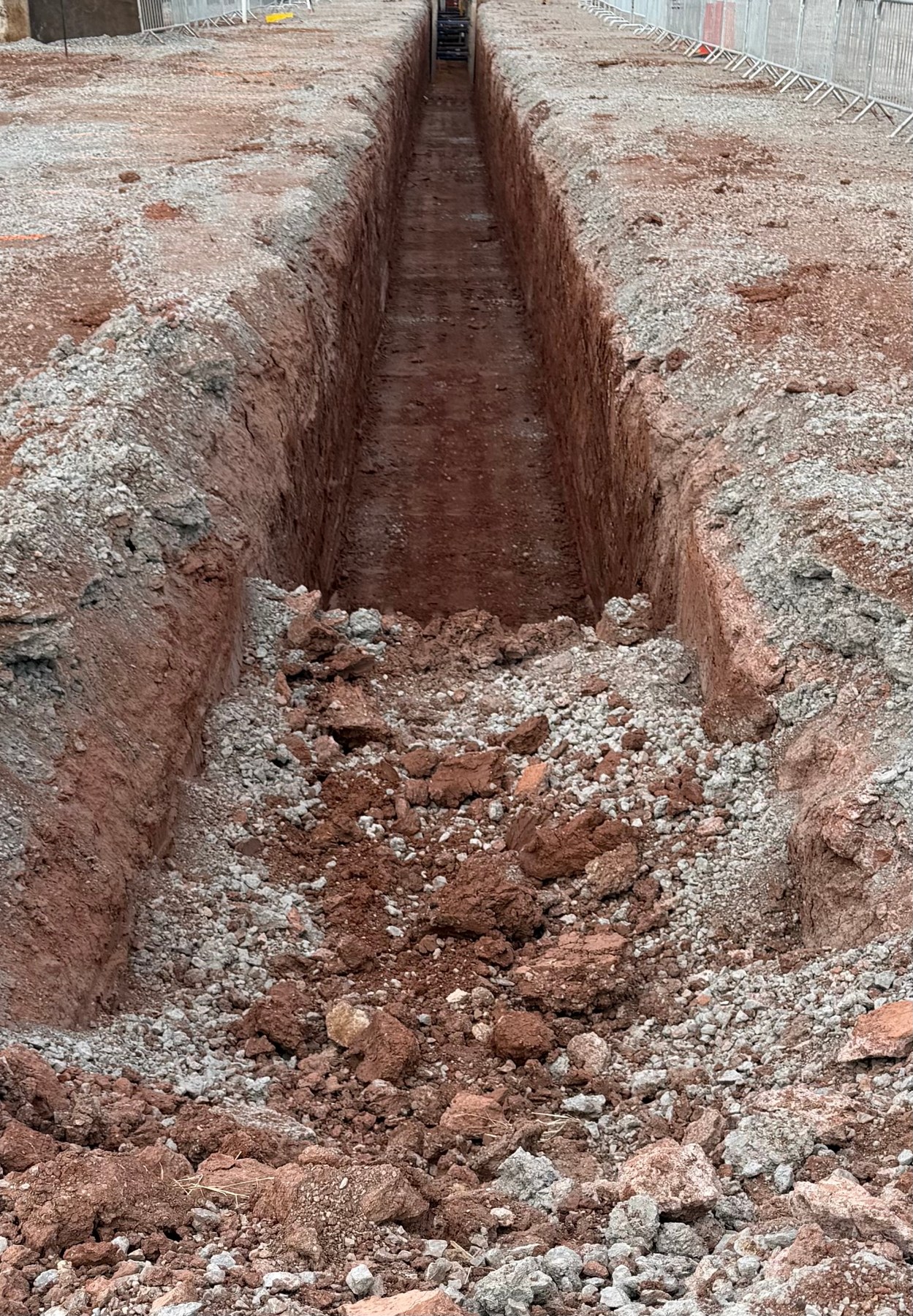
- Trench safety, dewatering and engineered protective systems below 60 inches
Hydro excavation and utility locating
On a live campus, digging blind is not an option. We locate, expose and document before excavation and while it is underway.
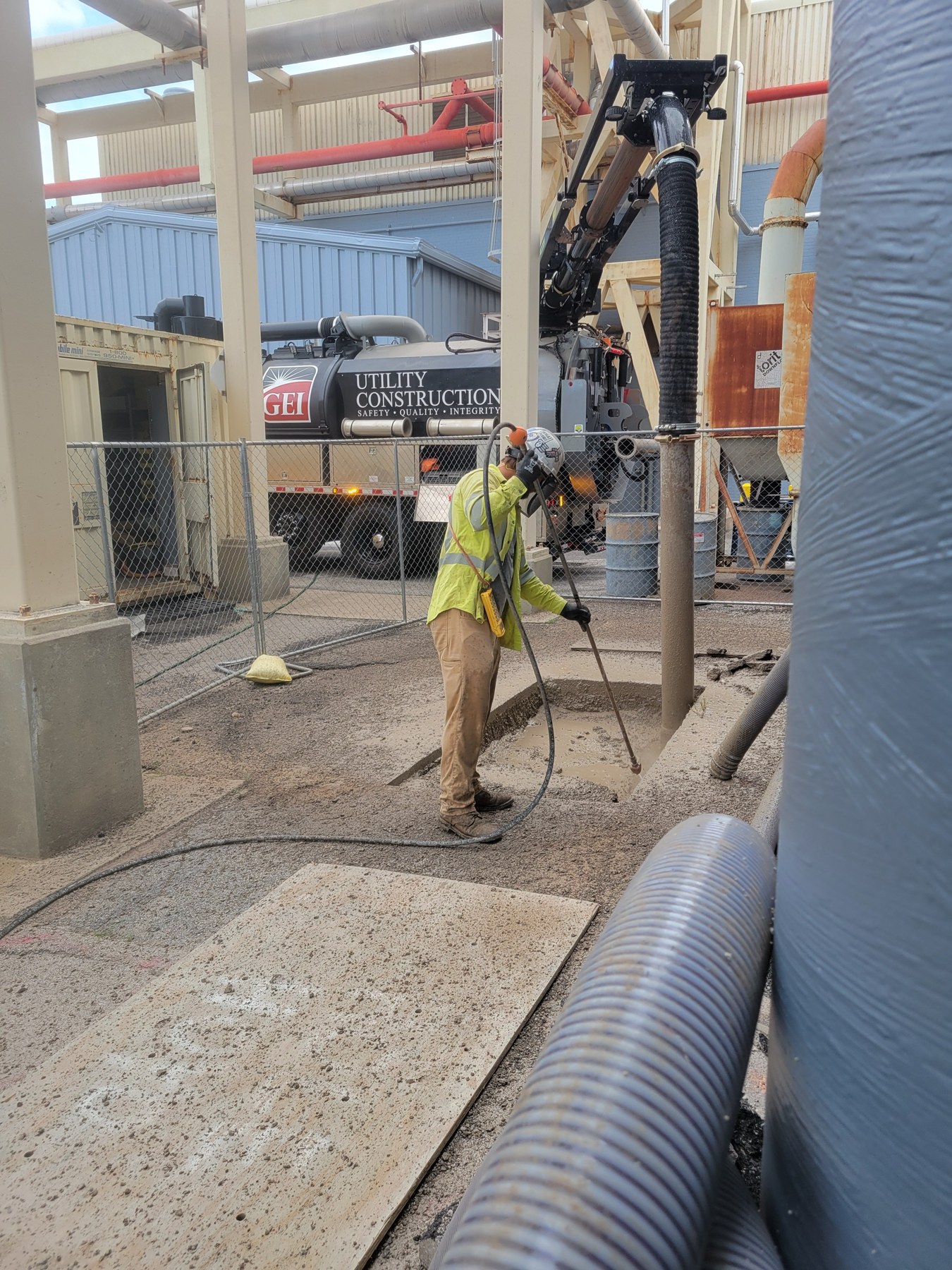
- Daylighting and test pits around energized feeders and fiber
- Electromagnetic and ground-penetrating radar locating through our True-Spot team
- Remote-hose vacuum excavation inside congested electrical yards
- Time-and-material hydrovac crews on call for owners, EPCs and electrical contractors
Directional drilling, staking and site work
The rest of what it takes to get utilities from the property line to the building without disturbing what is already in service.
- Horizontal directional drilling under roads, duct banks and live utilities
- Construction staking, GPS layout and as-built surveys
- Electrical yard grading, structural excavation and backfill
- Aerial utility construction for temporary and permanent power feeds
Know before you dig, prove it after
Scanning, layout and documentation
The services around the excavation are what keep a critical site predictable. We provide them in-house so the crew that scans the ground is the same team that stakes it, builds it and documents what went in.
Ground penetrating radar
Non-destructive subsurface scanning that maps existing conduit, pipe, rebar and voids before the first bucket. Paired with electromagnetic locating and hydro excavation to confirm what the radar shows.
Construction staking and layout
GPS and robotic total station layout of duct bank alignments, vaults, handholes, equipment pads and grades from the engineer’s model, with control maintained through every phase.
As-built CAD documentation
Every run, vault, tie-in and depth captured as it is installed and delivered as georeferenced CAD and GIS as-builts, so the record matches what is in the ground.
Concrete wall and slab scanning
GPR scanning of walls, slabs and equipment pads to find rebar, post-tension cables and embedded conduit before coring, cutting or anchoring on an occupied site.
Why GEI
What owners, EPCs and electrical contractors get
Schedule certainty
Energization dates and go-live milestones do not move. We staff to the schedule, run our own equipment fleet, and keep spare capacity so a weather week does not become a slipped week.
Redundancy built in
We install A and B pathways the way the design intends, with the separation, encasement and documentation that keep a single dig from taking down both.
Safety, staffed
Daily pre-task plans, trench protective systems, competent-person oversight and a safety program that is measured every week, not once a year.
Precision you can audit
Georeferenced takeoffs, GPS layout, mandrel and pull-string on every duct, and as-builts that match what is in the ground.
One contractor, whole scope
Excavation, duct bank, hydro excavation, directional drilling, fiber splicing, aerial and locating are all in-house. One point of accountability from the fence to the building.
Discretion by default
We follow owner badge, security and no-photo policies without exception. What happens on your campus stays on your campus.
The cost of a strike
One utility hit can take a campus off schedule
Recent work
Mission-critical projects
- Medium and high-voltage feeder improvements with MV vaults
- Fiber and communications duct banks with telecom handholes and CV vaults
- Fiber trench trough system with road crossings and tie-ins
- Electrical yard duct systems
- Underground plumbing and process cooling water piping
- Construction staking, as-builts and on-call hydro excavation
- Campus underground utility and duct bank construction
- Coordination with electrical and mechanical contractors on a phased build
- Medium-voltage duct banks, Sweetwater, Texas
- Data center excavation and bores for a national carrier
- Excavation and boring for a high-density computing facility
Out of respect for our clients’ security and photo policies, we do not publish owner names or site photography from mission-critical projects. References are available on request.
Planning a critical build?
Send us the drawings or a scope narrative and an estimator will respond within one business day. Call (918) 447-3350 or use the form.